

Email remains one of the most effective tools nonprofits have for engaging supporters, driving donations and nurturing long-term relationships. Even as new channels emerge, well-crafted email campaigns continue to outperform many other outreach methods by both reach and return on investment.
Why Email Still Matters for Nonprofits
- Email is not just alive. It’s thriving in the nonprofit sector.
- According to NPTech for Good, 86% of nonprofits use email marketing as a primary way to connect with supporters.
- 48% of donors say email is their preferred way to receive updates and appeals.
- Email contributed to 11% of all online fundraising revenue in 2024.
- When nonprofits have a donor’s email address, offline donor retention improves by about 29%.
These numbers show that email is both widespread and impactful. However, effectiveness depends on strategy, deliverability and donor experience.
Current Nonprofit Email Benchmarks
Understanding current benchmarks can help you evaluate performance and set realistic goals.
Open Rates
- The average nonprofit email open rate is approximately 28.6%.
- Welcome emails often perform significantly better than standard campaigns, in some cases reaching around 80% open rates:
High open rates reflect trust and list quality. If your numbers are significantly lower, it may indicate deliverability or engagement issues.
Click-Through Rates
- The average click-through rate for nonprofit emails is around 3.29%.
While clicks may seem modest, they represent engaged supporters taking action beyond simply opening your message.
Email Volume and Frequency
In 2024, nonprofits sent an average of 62 emails per subscriber, which works out to just over one email per week.
Consistency keeps your cause visible. However, volume without value can quickly lead to unsubscribes. Every message should offer something meaningful, whether that’s impact reporting, storytelling or a clear call to action.
Personalisation and Segmentation Drive Results
Modern donors expect relevance.
- 63 percent of nonprofits personalise their emails.
- Emails with personalised subject lines are about 26% more likely to be opened.
- Personalised calls to action can more than double conversions compared with generic ones.
Segmentation by giving history, engagement level or interests helps ensure donors receive content that feels tailored rather than mass-distributed.
Mobile and Design Considerations
More than half of nonprofit emails are opened on mobile devices.
If your emails are not optimised for mobile screens, you risk losing engagement within seconds.
Best practice includes:
- Responsive design
- Short, clear subject lines
- Prominent calls to action
- Fast-loading images
- Simple layouts
Including video can boost click rates significantly, with some research suggesting increases of up to 65%.
Design is no longer just aesthetic. It directly affects performance.
Monetary Impact of Email
Email may not always be the largest revenue channel, but it is one of the most reliable.
- Nonprofits raise an average of 1.11 USD per email contact, with small organisations averaging over 6 USD per contact.
- Every 1,000 fundraising emails generated around 58 USD in 2024.
These figures demonstrate that even incremental improvements in open rate or inbox placement can translate into meaningful gains.
Test Before You Send: Protect Your Deliverability
Even the most compelling message can’t inspire donations if it never reaches the inbox.
Increased sending volumes, tighter spam filtering, and evolving authentication standards such as SPF, DKIM and DMARC mean nonprofits must take deliverability seriously.
Pre-send testing helps identify potential problems before they affect campaign performance.
Using an email testing tool allows you to:
- Check likely spam filter placement
- Identify problematic wording or formatting
- Verify authentication setup
- Review inbox rendering across providers
- Catch broken links and layout issues
The SMTP2GO Email Testing Tool enables nonprofits to preview campaigns across major mailbox providers and identify deliverability risks before sending. Rather than diagnosing problems after a campaign underperforms, teams can make adjustments in advance.
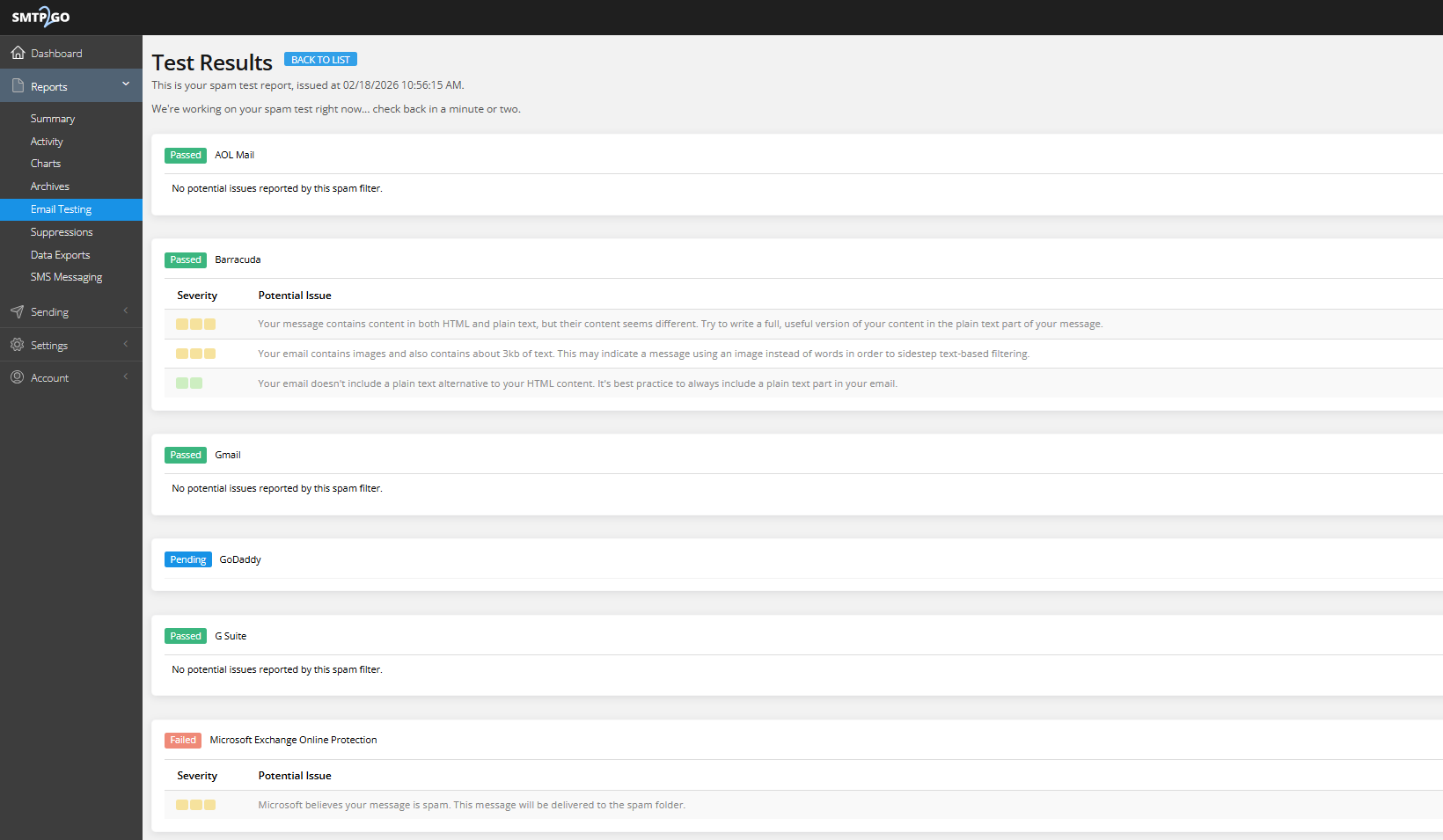
For time-sensitive appeals, such as Giving Tuesday or emergency fundraising campaigns, this proactive approach can protect both engagement and revenue.
Testing is no longer optional. It is a core part of a modern email strategy.
Practical Steps to Improve Inbox Placement and Engagement
To maximise your email performance:
- Grow permission-based lists through your website, donation forms and events.
- Clean inactive subscribers regularly to protect sender reputation.
- Use authentication standards such as SPF, DKIM and DMARC correctly.
- Segment donors by behaviour and giving history.
- Optimise for mobile devices.
- Send automated welcome emails to new subscribers.
- Test before you send, especially for major campaigns.
The Bottom Line
Email remains one of the most powerful and cost-effective communication channels available to nonprofits. Donors prefer it. It drives measurable revenue. It supports long-term retention.
But success depends on more than simply pressing send.
With thoughtful segmentation, strong mobile design, consistent value and reliable pre-send testing, nonprofits can improve inbox placement, strengthen donor relationships and maximise fundraising impact.

No thoughts shared yet. Be the first to leave a comment above!